

Design
The Architecture of an Abaya
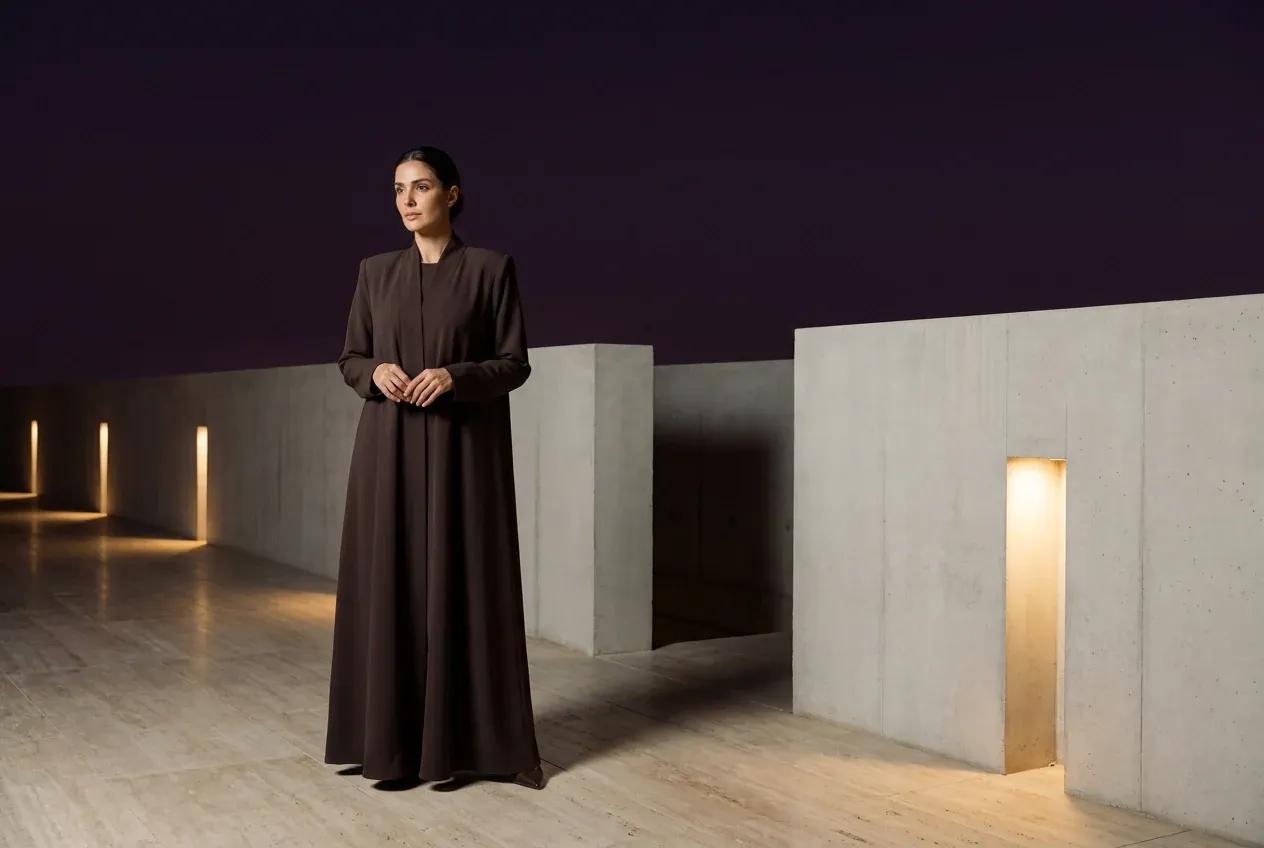
There is a moment, before any fabric is chosen, when a garment exists only as a set of relationships: shoulder to hem, sleeve to wrist, the width of a panel against the length of a line. Architects call this proportion. So, quietly, do we. An abaya may read as a single, uncomplicated shape — but the ease it projects is the result of decisions made in millimetres.
At LAYL, every design begins with proportion, balance and precision. Rather than decorating a garment, we refine it, removing the unnecessary until only what truly matters remains. That principle is easy to state and difficult to practise, because restraint leaves nowhere to hide. When there is no embroidery to draw the eye, the line itself has to be right.
Structure before surface
Most of what makes an abaya feel expensive happens before anyone thinks about colour. It happens in the architecture of the cut.
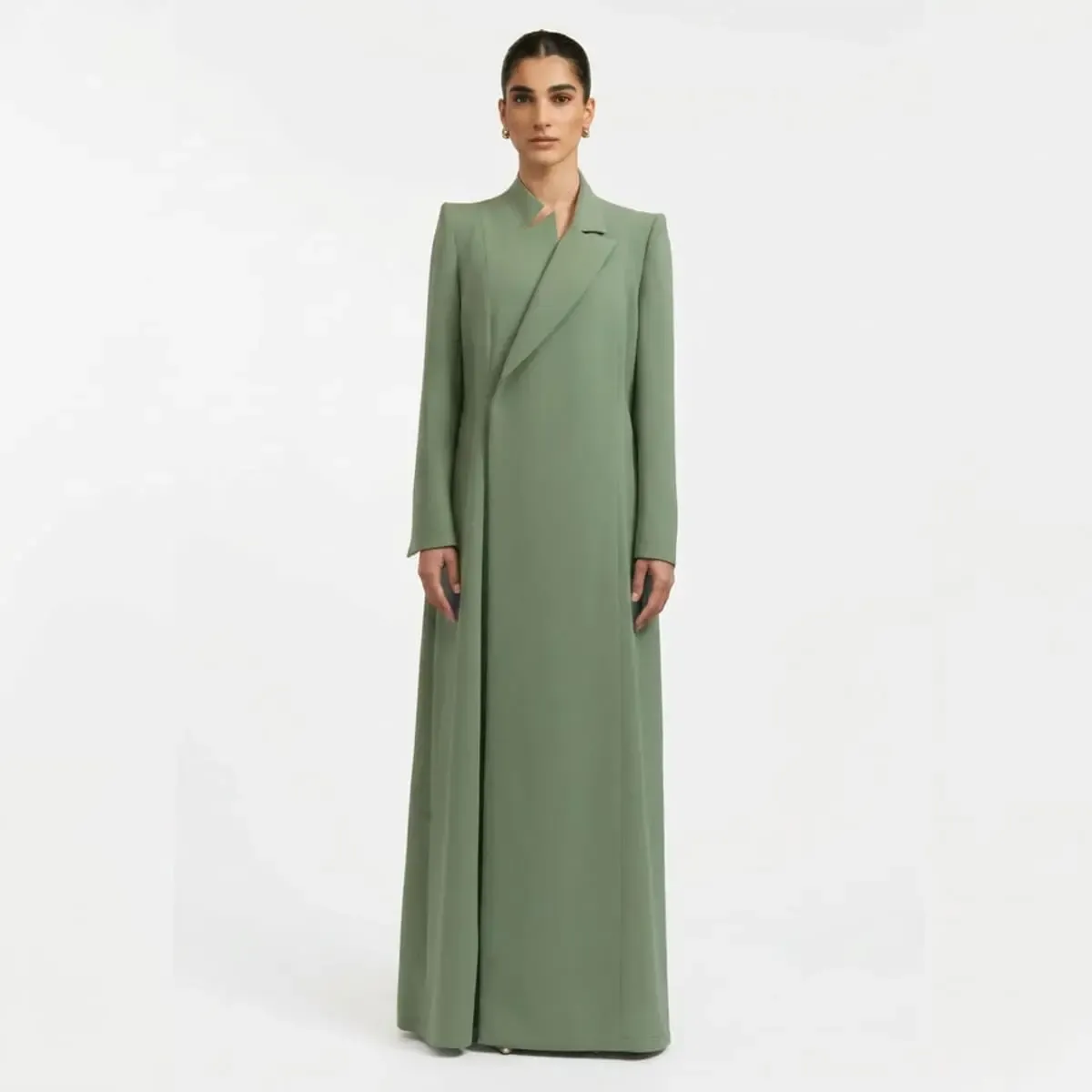
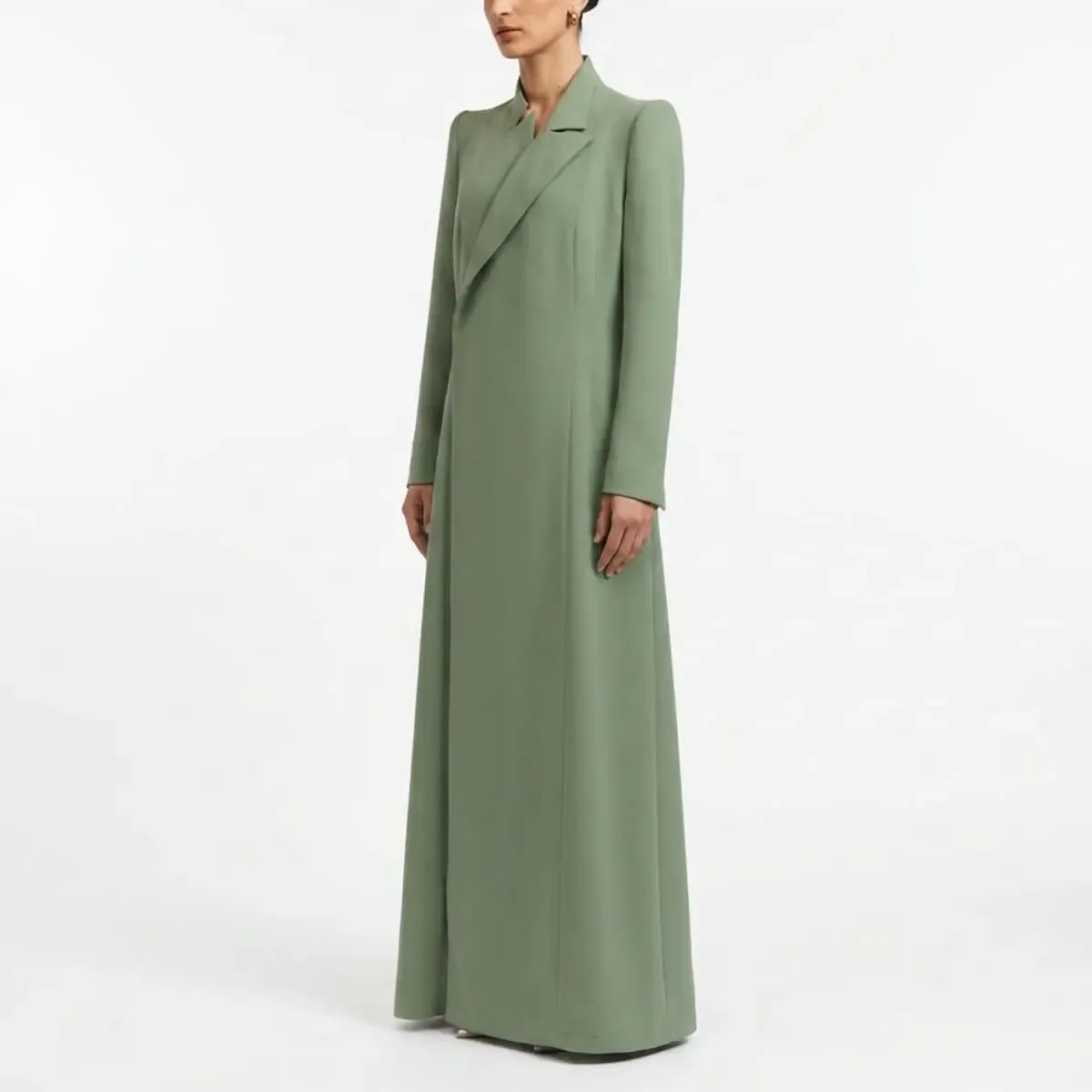
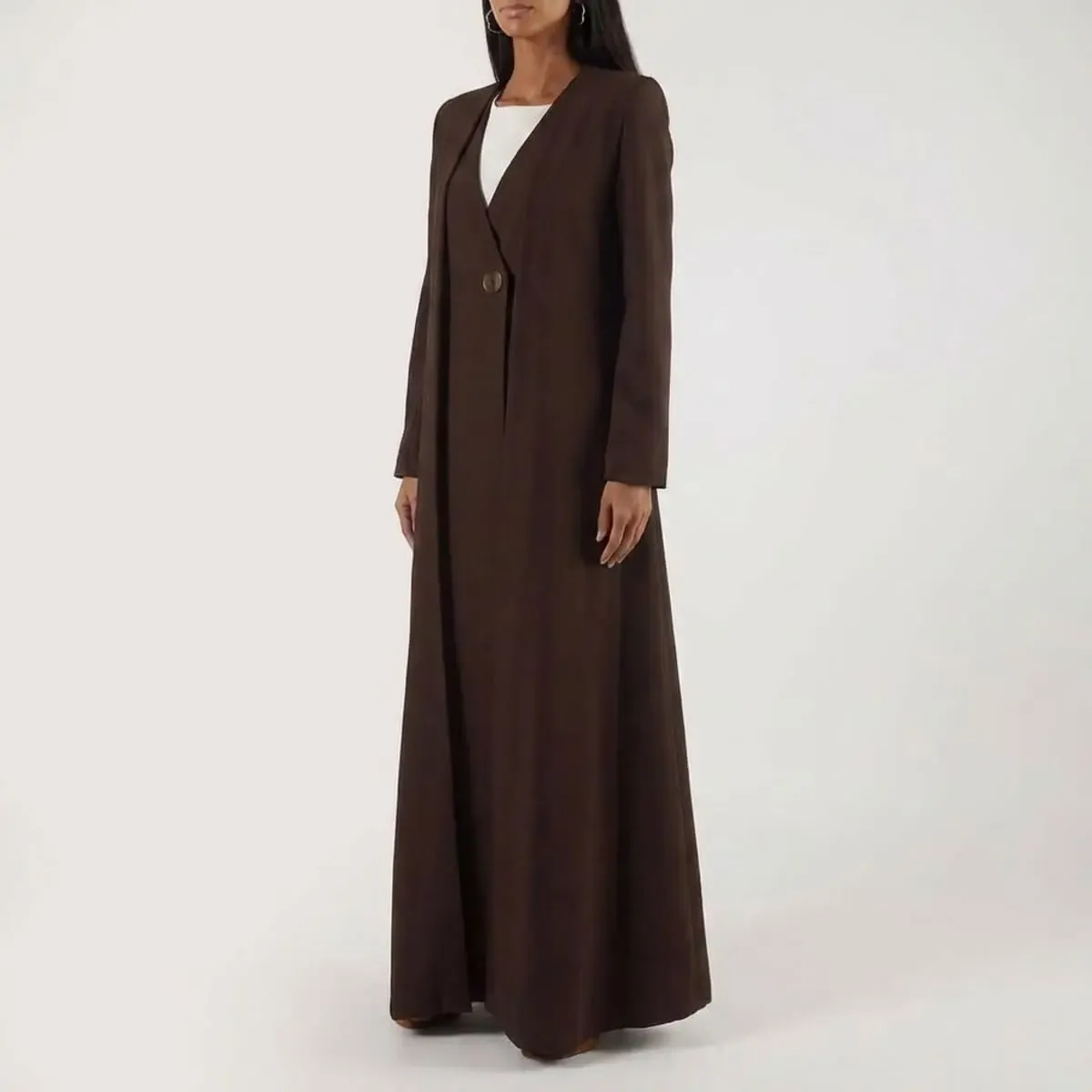
Consider the shoulder. A softly structured shoulder gives a garment its posture — the quiet authority that lets a floor-length silhouette fall cleanly rather than collapse. From there, the eye travels down a vertical line. Where seams are placed, and how they are placed, decides whether that line reads as graceful or merely long. Our Verde Tailored Abaya uses carefully positioned vertical seams for exactly this reason: they create elongation and shape without a single added detail.
The neckline is the next architectural decision. An asymmetric crossover lapel, a soft V-wrap, a deep wrap front — each changes the geometry of the upper body and, with it, the entire mood of the piece. None of these are ornaments. They are structural choices that happen to be beautiful.
A well-made abaya is not decorated. It is composed.
The behaviour of a line
An architectural silhouette is not the same as a rigid one. The best structures account for movement — the way light shifts across a facade through the day, the way a space feels different as you walk through it. Clothing has its own version of this: drape.
A floor-length column reads as architecture when it is still and as movement when it is worn. The column A-line silhouette we return to again and again is engineered for both states. Standing, it holds a clean, elongated line. Walking, it opens into an unhurried sweep at the hem. Nothing about that is accidental; the width of the lower panels, the weight of the cloth and the length are calibrated together so that the garment moves the way a considered space invites you to move — calmly, without friction.
This is why fabric and form cannot be separated. A structured shoulder means little if the cloth beneath it cannot hold a line. A generous hem means little if the fabric is too stiff to fall. Proportion sets the intention; material carries it out.
What restraint asks of a garment
Removing detail sounds like less work. In practice it is the opposite. Every element that survives has to justify itself, because it is now load-bearing.
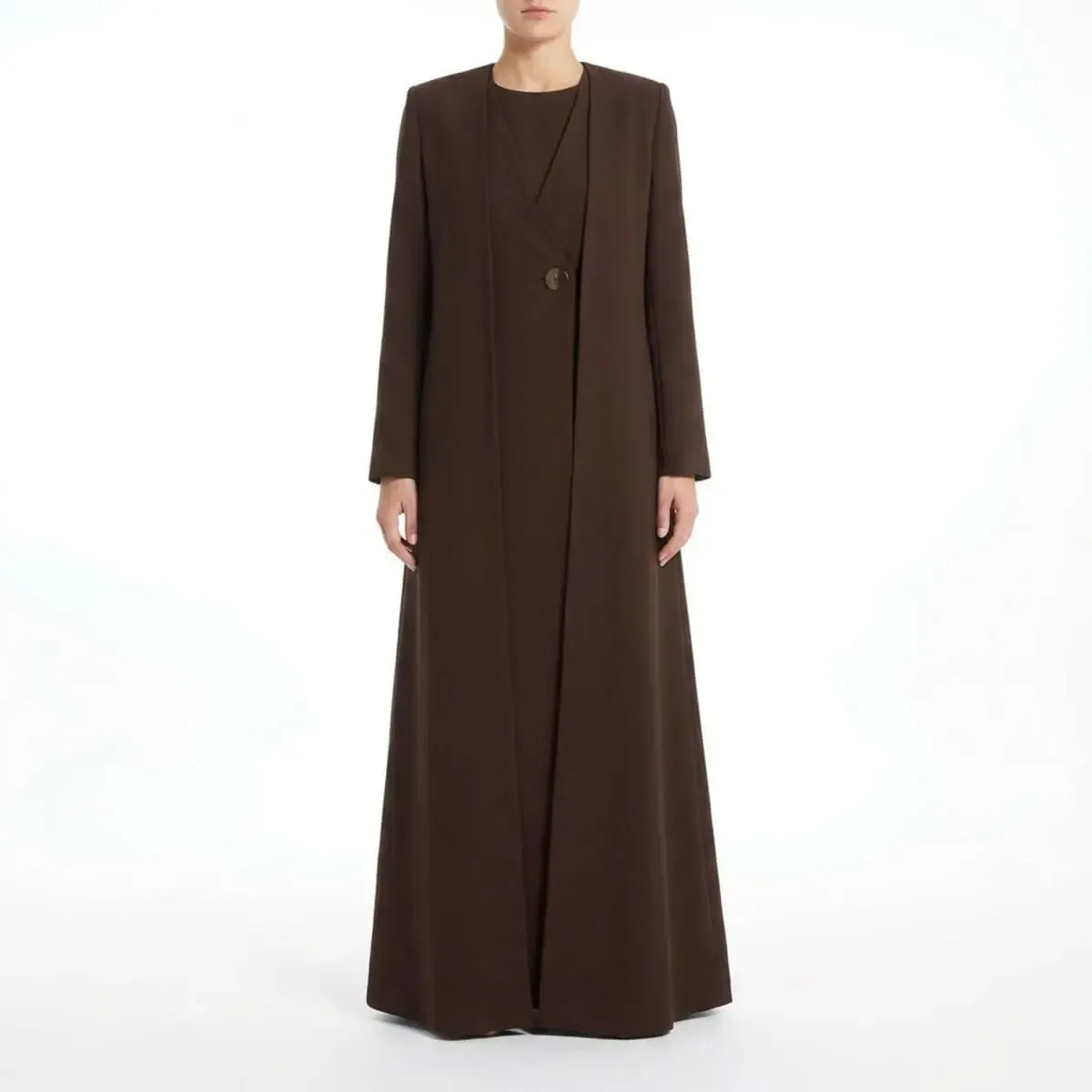
A single tonal button, as on the Espresso Tailored Abaya, is a good example. On a busy garment it would disappear. On a restrained one it becomes a punctuation mark — the one gesture the eye lands on — so its size, placement and finish carry unusual weight. The same is true of a concealed closure, a stand collar, or the quiet interruption of a wave-edge trim. In a minimalist piece, the few remaining details are the design.
Restraint also disciplines fit. A relaxed, tailored fit is harder to achieve than either a fitted or a loose one, because it has to read as effortless while still being precise. It should never cling and never drown the figure. That balance — ease held inside structure — is the whole ambition of a modern abaya.
Reading a garment like a building
If you want to see the architecture in an abaya, look the way you would look at a building. Start with the overall proportion: does the silhouette feel balanced from a distance, before any detail resolves? Then follow the vertical lines and notice where they are broken, and why. Look at the shoulder for posture, the neckline for geometry, the hem for how the piece will move. Finally, count the details. In a considered garment there will be very few, and each one will be doing something.
What you are really assessing is whether the decisions were made deliberately. Mass-produced dressing tends to add; considered dressing tends to subtract. The difference is legible even at a glance, long before you touch the cloth.
The quiet reward
An architectural approach to design does not announce itself. It rarely photographs as dramatically as embellishment, and it never trends. What it offers instead is longevity — a garment that looks composed this season and will look composed in five years, because it was built on proportion rather than novelty.
That is the reward of treating an abaya as architecture. The structure does the work so that the wearer does not have to. She simply puts it on, and the line, the drape and the restraint speak on her behalf — quietly, and for a long time.
Pieces from this story
 Culture
 Quiet Luxury Through a Regional Lens
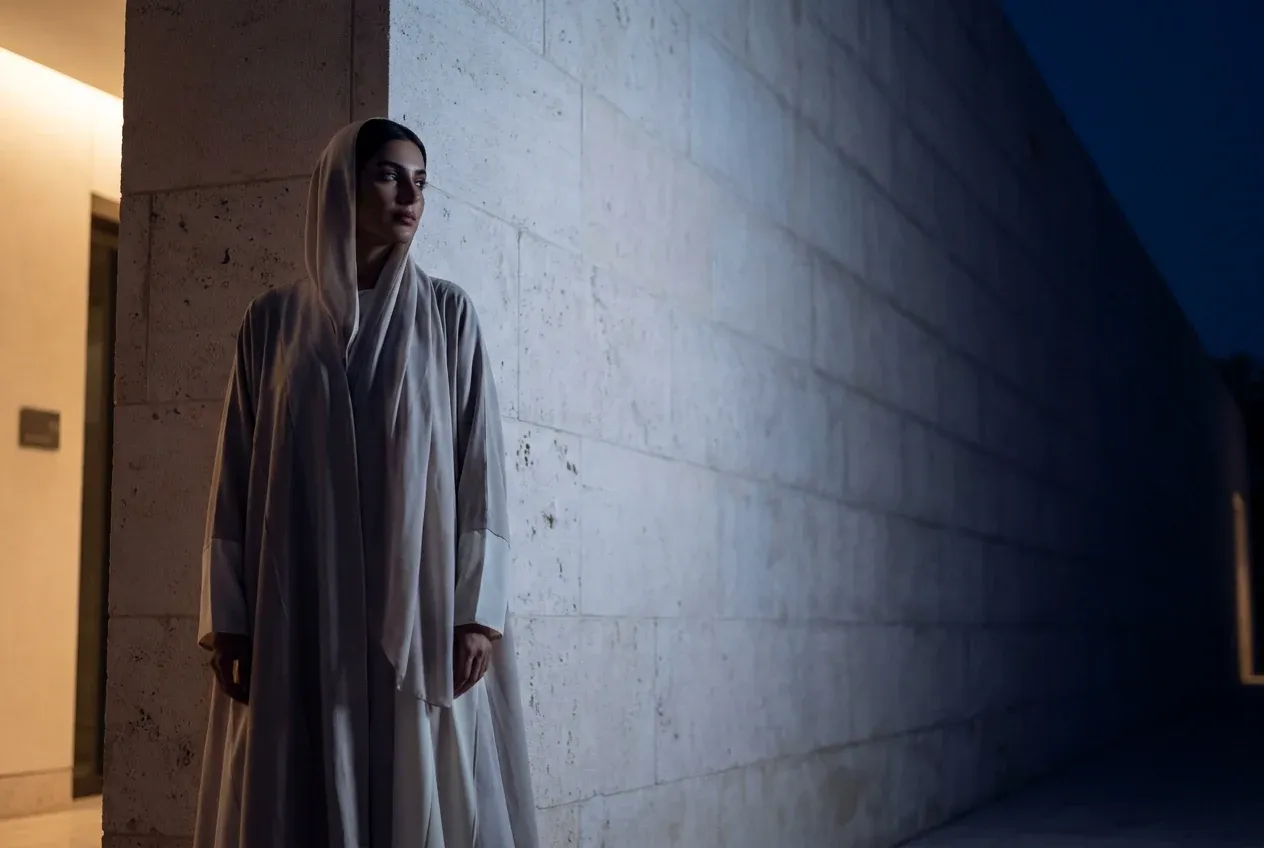
Quiet luxury is often described as a European idea. Seen from the Gulf, it looks a little different — and, in some ways, entirely familiar.
Read article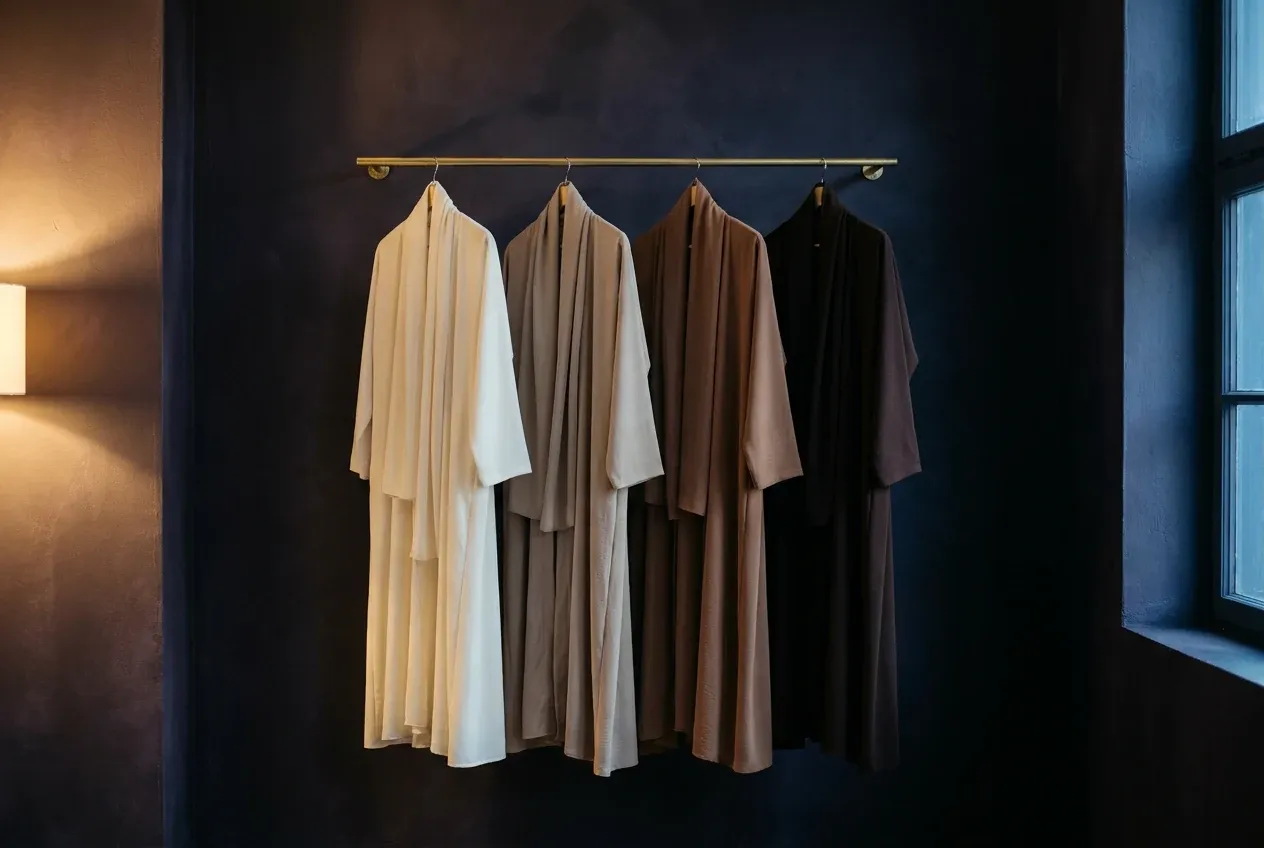 Style
Style How to Build a Refined Abaya Wardrobe
A considered wardrobe is not a large one. A practical guide to building a small collection of neutral abayas that works harder than a closet full of pieces.
Read article